
Baby teeth and teething
Share this page
Baby teeth start coming in between 6 and 10 months for most babies, and teething can cause drooling, chewing, and fussiness. Gentle cleaning, safe comfort measures, and an early dental visit help protect your child's smile.
- 6,065 pediatric offices listed
- in 51 states
7 min readPublished November 21, 2026Updated November 21, 2026
AI-assisted. AI disclosureEditorial policy













When baby teeth come in
Most babies get their first tooth between 6 and 10 months old. Some start around 3 months. Others may not see a tooth until after their first birthday. All of these can be normal.
The front bottom teeth usually come in first. The front top teeth often follow next. Most children have a full set of 20 baby teeth by about age 3.
Every child has their own timeline. If you have questions about your child’s teeth or development, ask a dentist or pediatrician.
A simple timeline many parents see:
- 6 to 10 months: first tooth, often a front bottom tooth
- 8 to 12 months: front top teeth appear
- 12 to 18 months: more teeth fill in, including first molars
- 2 to 3 years: second molars finish the set of 20 baby teeth
Use this as a general guide only. Your child may follow a different order.
Teething signs and symptoms
Teething can cause discomfort, but it should not cause serious illness. Common signs include:
- Drooling more than usual
- Chewing on hands, toys, or a parent’s finger
- Swollen or tender gums
- Fussiness or irritability
- Trouble sleeping
- Eating less than usual
- A low fever under 100.4 F
A fever over 100.4 F, diarrhea, a body rash, or a child who seems very sick are not typical teething symptoms. Those can mean an illness. Call your child’s doctor if you see these signs.
Some babies have very mild symptoms. Others seem more uncomfortable. The intensity can change from one tooth to the next.
How to soothe a teething baby safely
There are safe ways to ease teething discomfort. What helps one baby may not help another.
- Offer a clean teething ring or a clean, damp washcloth that has been chilled in the refrigerator, not the freezer. Frozen items can be too hard and too cold.
- Gently rub your baby’s gums with a clean finger for a minute or two.
- If your baby eats solid foods safely, offer cold, soft foods such as plain yogurt or chilled fruit puree if they are age appropriate.
- Give extra cuddles and quiet playtime. Distraction can help.
- If your child is older and eating table foods, a cold piece of fruit in a mesh feeder may help. Watch closely to prevent choking.
Ask your dentist or pediatrician before giving any pain medicine. If they say it is okay, follow the dosing instructions exactly. Never give aspirin to a child.
Do not use teething gels or liquids with benzocaine in children under 2 unless a doctor or dentist gives clear instructions. Benzocaine can cause a rare but serious blood problem. Do not use homeopathic teething tablets or gels, especially those with belladonna. Safety warnings have been issued about these products. Do not use amber teething necklaces, bracelets, or beads. They can break and become a choking or strangulation hazard.
Cleaning baby teeth and gums
Start cleaning your baby’s mouth before teeth come in. Wipe the gums with a clean, damp washcloth or piece of gauze after feedings. This gets your baby used to mouth care.
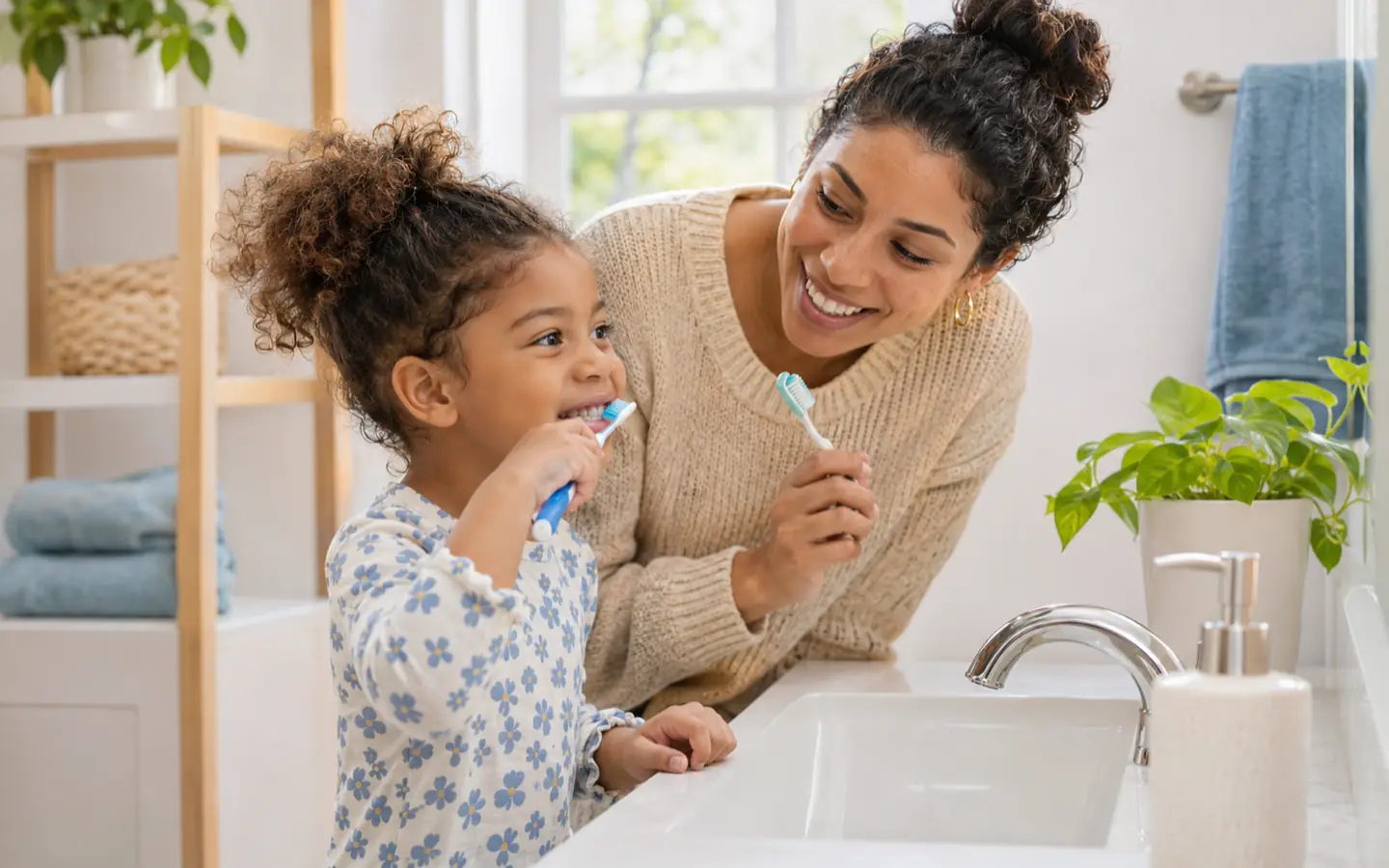
When the first tooth appears, brush twice a day with a soft baby toothbrush and water. You can also use fluoride toothpaste.
Use the right amount:
- Under age 3: a smear the size of a grain of rice
- Age 3 and older: a pea-size amount
Teach your child to spit out toothpaste, but do not rinse with water right after brushing. Let the small amount of fluoride stay on the teeth.
Brush for your child until they can do a good job on their own, usually around age 6 or 7. Even after that, watch and help as needed. Make brushing part of the morning and bedtime routine.
Feeding habits that protect baby teeth
Baby teeth can get cavities, even before all of them have come in. Cavities in baby teeth are sometimes called early childhood caries or baby bottle tooth decay.
To lower the risk:
- Do not put your baby to bed with a bottle of milk, formula, juice, or sweetened drink.
- If a bottle at bedtime is needed, fill it with water only.
- Offer water between meals.
- Limit juice and sweet drinks. Serve them only at mealtimes, if at all.
- Wipe or brush teeth after feedings when possible.
- Avoid sharing spoons or cleaning a pacifier in your mouth. Cavity-causing bacteria can pass from parent to child.
If you breastfeed, gently wipe gums or brush teeth after nighttime feedings once teeth come in. Ask your dentist for advice if your child feeds often overnight.
When baby teeth fall out
Children usually start losing baby teeth around age 6. The front bottom teeth often get loose first. Most baby teeth fall out over several years. The last baby teeth are often gone by age 12 or 13.
Loose teeth are normal. Let your child wiggle a loose tooth gently with their tongue or clean fingers. Do not pull a tooth that is not ready to come out. If a loose tooth is painful or seems stuck, ask a dentist.
If a baby tooth falls out early from an accident or a cavity, tell your dentist. The dentist may want to check the space. Sometimes a space maintainer is discussed.
Why baby teeth matter
Baby teeth are placeholders for adult teeth. They help with chewing, talking, and holding space in the jaw. If a baby tooth is lost too early, nearby teeth can shift into that space. That can make it harder for adult teeth to come in straight.
Cavities in baby teeth can cause pain and infection. That can affect eating, sleep, speech, and school. Treating cavities in baby teeth is just as important as treating cavities in adult teeth.
Dental visits for babies and toddlers
Your child’s first dental visit should happen by their first birthday or within 6 months of the first tooth, whichever comes first. This early visit is mostly about checking growth, talking about habits, and helping you prevent problems.
At the visit, the dentist or hygienist may:
- Look at your baby’s teeth, gums, and mouth
- Show you how to clean the teeth
- Talk about fluoride, feeding habits, and pacifier use
- Answer questions about teething and thumb sucking
- Check for early signs of cavities
Many early visits are short and gentle. You can often hold your child on your lap. Ask the office what to expect before you arrive.
Teething myths and unsafe remedies
Some common teething remedies are not safe.
- Avoid teething necklaces and bracelets, including amber, wood, or silicone. They can cause choking or strangulation.
- Avoid numbing gels with benzocaine unless a doctor or dentist gives clear instructions.
- Avoid homeopathic teething tablets or gels, especially those with belladonna.
- Avoid rubbing alcohol on the gums.
- Avoid frozen teething rings. They can be too hard and too cold for sensitive gums.
If a product promises to stop all teething pain or seems too good to be true, talk with a dentist or pediatrician before using it.
When to call a dentist or doctor
Call if your child:
- Has a fever over 100.4 F, rash, or diarrhea during teething
- Seems in severe pain that does not get better with safe comfort measures
- Has red, swollen, or bleeding gums beyond normal teething
- Has a tooth that looks chipped, dark, or injured
- Has trouble eating, drinking, or sleeping because of mouth pain
- Has not had a first tooth by 18 months
For emergencies, call 911 or go to an emergency room if your child has severe swelling of the face or mouth, trouble breathing or swallowing, uncontrolled bleeding, or facial trauma.
Finding a dentist for your child
A pediatric dentist has extra training in caring for children. A general dentist can also care for many children. Look for someone who is patient, explains things simply, and makes your child feel comfortable.
You can use Dentist Navigator to search for dentists by pediatric specialty, location, and insurance. You can also ask your pediatrician, family, or friends for names. When you call, ask if they see young children and what their first visit is like.
If your child is anxious, tell the office ahead of time. Many dental teams are used to helping nervous kids. You can read books about the dentist, practice opening wide at home, and bring a comfort item.
Finding the right fit early can help your child build healthy dental habits for life.
Sources
When should I start cleaning my baby's teeth?
Start wiping your baby's gums with a clean, damp cloth before teeth come in. Once the first tooth appears, brush twice a day with a soft baby toothbrush, water, and a smear of fluoride toothpaste the size of a grain of rice.
How do I know if my baby is teething or sick?
Teething may cause drooling, chewing, swollen gums, fussiness, and a low fever under 100.4 F. A fever over 100.4 F, diarrhea, a rash, or a child who seems very sick is likely not from teething, so call your child's doctor.
Are teething necklaces safe?
No. Amber, wood, and silicone teething necklaces or bracelets can break and cause choking or strangulation. Do not use them, even if they are marketed for teething.
When should my child first see a dentist?
Schedule a first dental visit by your child's first birthday or within 6 months after the first tooth comes in, whichever happens first. The early visit checks growth, helps you learn cleaning routines, and can catch early signs of cavities.
Can baby teeth get cavities?
Yes. Baby teeth can get cavities even before all of them have come in. Avoid putting your baby to bed with a bottle of milk or juice, limit sweet drinks, and clean teeth and gums regularly.
Share this page
Related

 Your child’s first dental visitA child's first dental visit usually happens by age 1 or when the first tooth appears, whichever comes first. This early checkup helps your child get used to the dental office and lets the dentist look for early signs of problems.

 Choosing a pediatric dentistA pediatric dentist has extra training in children's teeth, gums, and behavior. Look for one who talks clearly, has a calm office, and takes your dental plan. Then schedule a first visit by age one or when the first tooth appears.
 Cavities: how they start and how to prevent themCavities are small holes in tooth enamel caused by acid from bacteria that feed on sugars and starches. You can help prevent them with daily brushing and flossing, fluoride, smart eating habits, and regular dental checkups.
Find a dentist
Find a pediatric dentist