
Dental care during pregnancy
Share this page
Dental care is safe and important during pregnancy. Tell your dentist you are pregnant, and keep up with cleanings, exams, and any needed treatment.
- 132,409 general dentistry offices listed
- in 51 states
8 min readPublished November 21, 2026Updated November 21, 2026
AI-assisted. AI disclosureEditorial policy

Find General dentist near you












Dental care during pregnancy: what you need to know
Pregnancy changes many things, including your mouth. You may wonder if it is safe to see the dentist while pregnant. Yes, it is. The American Dental Association, the American College of Obstetricians and Gynecologists, and many other health groups agree. Dental care during pregnancy is safe and important.
A healthy mouth can help you feel better. It may lower your chance of gum disease. Some studies link gum disease to pregnancy problems. The research is still growing. Do not skip routine dental care because you are pregnant.
Here is what to expect. We cover safe treatments, home care, and how to find a dentist who understands pregnancy.
Why dental care matters when you are pregnant
Your oral health is part of your overall health. When you are pregnant, your body works hard for you and your baby. An infection or swelling in your mouth can affect how you feel. It may add stress to your body.
Regular dental checkups and cleanings are safe during pregnancy. In fact, they are recommended. A healthy mouth helps you eat comfortably, sleep better, and avoid pain from cavities or gum problems.
Do not wait until after your baby is born to treat a dental problem. That includes a cavity, a cracked tooth, or bleeding gums. Treating problems early stops them from getting worse. Your dentist can make a treatment plan that fits your pregnancy.
How pregnancy can affect your mouth
Pregnancy hormones change how your gums react to plaque. Plaque is the sticky film of bacteria that forms on teeth. You may notice:
- Gums that bleed when you brush or floss
- Gums that look red, swollen, or tender
- A small bump on the gums, often called a pregnancy tumor or pyogenic granuloma
- Dry mouth or extra saliva
These changes are common. They usually go away after you give birth. They are also a sign to keep up with gentle brushing, flossing, and professional cleanings. If your gums bleed, do not stop brushing. That can make plaque build up and cause more irritation.
Some people also have morning sickness. It can bring stomach acid into the mouth. Acid can soften tooth enamel, the hard outer layer of your teeth. We talk more about morning sickness later.
Safe dental care during pregnancy
Most routine and urgent dental care is safe during pregnancy. That includes:
- Dental exams
- Cleanings
- Fillings for cavities
- Root canal treatment if needed
- Tooth extractions if needed
- Local anesthesia (numbing medicine) when your dentist chooses a pregnancy-safe option
Many dentists schedule non-urgent treatment during the second trimester. That is roughly weeks 14 through 20. By then, morning sickness often eases. Your belly is also not too big for lying back. But if you have pain, swelling, or an infection, do not wait. Treating an infection is safer than leaving it untreated.
Emergency dental care is safe too. Call your dentist right away if you have severe pain, swelling, or a mouth injury. Call 911 or go to an emergency room if swelling affects breathing or swallowing.
What to talk about with your dentist
Tell your dentist as soon as you know you are pregnant. Also tell the dental team if your pregnancy is high risk or if your obstetrician gave you special instructions. Bring a list of any medications, vitamins, or supplements you take, including prenatal vitamins.
Your dentist may ask:
- How far along you are
- Whether you have had any pregnancy complications
- What medications you take
- Whether you have had any mouth changes, like bleeding gums or tooth pain
Based on your answers, your dentist can adjust your care. They may:
- Use a pregnancy-safe local anesthetic if you need a filling or extraction
- Adjust the dental chair position to keep you comfortable
- Space out longer procedures or break them into shorter visits
- Delay purely cosmetic treatments until after you give birth
Ask questions. You might ask:
- Is this treatment necessary right now?
- What are the risks of waiting?
- What medications will you use, and are they safe during pregnancy?
- Do I need to talk to my obstetrician first?
Your dentist and your obstetrician can work together if needed.
Dental X-rays during pregnancy
Dental X-rays are safe during pregnancy when proper precautions are used. Modern digital X-rays use very low radiation. Your dentist will cover your belly and throat with a lead apron and thyroid collar. The American College of Obstetricians and Gynecologists says shielded dental X-rays do not harm a developing baby.
Many dentists still limit X-rays during pregnancy. They take only what is needed to diagnose a problem. If you have a dental emergency or a possible infection, an X-ray helps your dentist see what is going on. Without it, you may get incomplete care. Do not avoid an X-ray if your dentist says it is necessary. The risk of an untreated dental problem is often greater than the tiny amount of radiation from a shielded dental X-ray.
If you are still unsure, talk with your dentist and your obstetrician. They can help you weigh the options for your situation.
Medications and anesthesia during pregnancy
Some dental procedures need local anesthesia to numb the area. Lidocaine and other common local anesthetics are safe during pregnancy when used in the right doses. Your dentist will choose a version that is right for you. If you need antibiotics or pain relief, your dentist and obstetrician can pick pregnancy-safe options.
Always tell your dentist about any allergies or reactions to medicines. Also tell them about any changes to your health since your last visit.
If you get a prescription for an antibiotic or pain medicine after a dental procedure, take it exactly as directed. Do not stop early or change the dose without talking to your dentist or doctor.
Daily care at home
Good home care is extra important during pregnancy. Aim to:
- Brush your teeth twice a day with a soft-bristled toothbrush and fluoride toothpaste
- Floss once a day to clean between teeth and along the gumline
- Rinse with water after meals if you cannot brush right away
- Drink plenty of water, especially if you have dry mouth
- Eat a balanced diet with vegetables, fruits, whole grains, lean protein, and dairy or other calcium-rich foods
Fluoride toothpaste helps protect your teeth from cavities. Talk to your dentist if you have questions about fluoride or any other ingredient.
Morning sickness and your teeth
Morning sickness can put stomach acid on your teeth. Acid softens enamel and can lead to tooth wear or sensitivity. To lower the effect:
- After vomiting, rinse your mouth with plain water or a mix of water and a little baking soda. Use about one teaspoon of baking soda in one cup of water.
- Do not brush your teeth right away after vomiting. Wait about 30 minutes so your enamel has time to harden again.
- Use a bland-tasting toothpaste if strong flavors trigger nausea
- Try a small-headed toothbrush if brushing makes you gag
- Eat small, frequent meals instead of large ones
These small steps can help protect your teeth until morning sickness passes.
Diet, cravings, and your teeth
Pregnancy cravings are common. If you crave sugary snacks or drinks, limit how often you have them. Frequent sugar feeds the bacteria that cause cavities. Instead, choose:
- Fresh fruit
- Cheese or yogurt
- Nuts or seeds
- Raw vegetables with hummus
- Water or milk instead of soda or juice
If you do have something sweet or acidic, rinse with water afterward. Chewing sugar-free gum can also help increase saliva. Saliva washes away food particles and neutralizes acid.
Routine visits and cleanings
You can keep your regular dental cleaning schedule during pregnancy. In fact, many dentists recommend an extra cleaning if you have a lot of gum inflammation or a history of gum disease. Your hygienist will use standard tools to remove plaque and tartar. Cleanings are non-surgical and do not require numbing medicine. So there is no medication concern.
Tell your hygienist if your gums are tender. They can be gentle and may use a numbing rinse or gel if needed. Do not skip a cleaning because your gums bleed. Bleeding is a sign of inflammation. Removing plaque is the first step to improving it.
What to postpone until after pregnancy
Some dental treatments are not urgent and can wait until after you give birth. These include:
- Teeth whitening
- Cosmetic bonding or veneers
- Elective orthodontic adjustments that are not urgent
- Any treatment that is purely for appearance
If you are already in the middle of orthodontic treatment, keep your scheduled adjustment appointments unless your orthodontist tells you otherwise. Braces and clear aligners are safe during pregnancy. Let your orthodontist know you are pregnant so they can adjust your care as needed.
Finding a dentist who understands pregnancy
When you are pregnant, you want a dentist who listens to you. You want someone who works with your obstetrician if needed. Dentist Navigator can help you search for dentists by insurance, specialty, and location. That way you can find an office that takes your plan and is easy to reach.
Before your first visit, call the office and ask:
- Do you have experience treating pregnant patients?
- What precautions do you take for pregnant patients?
- Can you coordinate with my obstetrician if needed?
You can also check online reviews from other patients. You can verify the dentist’s license through your state dental board. A good relationship with your dentist makes it easier to get care at every stage of life.
If cost is a concern, ask the office for a treatment plan with estimated fees before you schedule any work. Many offices will also check your insurance benefits and explain what is covered. For help understanding dental insurance, see our related guides on how dental insurance works and how to check if a dentist takes your insurance.
Pregnancy is a time to take care of yourself in every way, including your teeth. Regular dental visits are part of that care. Talk openly with your dentist and your obstetrician. Keep up your daily brushing and flossing. That gives you and your baby a strong start.
Sources
Is it safe to get a dental cleaning while pregnant?
Yes, dental cleanings are safe and recommended during pregnancy. They remove plaque and tartar that can cause gum inflammation. Hormonal changes make gum inflammation common. Let your hygienist know you are pregnant so they can keep you comfortable.
Can I get a cavity filled during pregnancy?
Yes, getting a cavity filled is safe during pregnancy. This is especially true if the cavity causes pain or is likely to get worse. Your dentist can use a pregnancy-safe local anesthetic. Many dentists prefer the second trimester for non-urgent fillings. But needed treatment should not be delayed.
What if I need a dental X-ray while pregnant?
Dental X-rays with a lead apron and thyroid collar are safe during pregnancy. The radiation dose is very low. The shielding protects your baby. Your dentist will only take X-rays that are needed to diagnose a problem.
Why do my gums bleed more now that I am pregnant?
Pregnancy hormones increase blood flow to your gums. They also change how your gums respond to plaque. This can cause tenderness, redness, and bleeding when you brush or floss. Daily brushing, flossing, and professional cleanings can help. Bleeding usually improves after you give birth.
Should I tell my dentist I am pregnant even if I am early?
Yes, tell your dentist as soon as you know you are pregnant. This lets them adjust your care and use pregnancy-safe materials. They can also decide if any treatment should wait or be coordinated with your obstetrician.
Share this page
Related

 What happens at a dental cleaningA dental cleaning removes plaque, tartar, and surface stains from your teeth. It usually includes an exam, scaling, polishing, flossing, and sometimes fluoride.
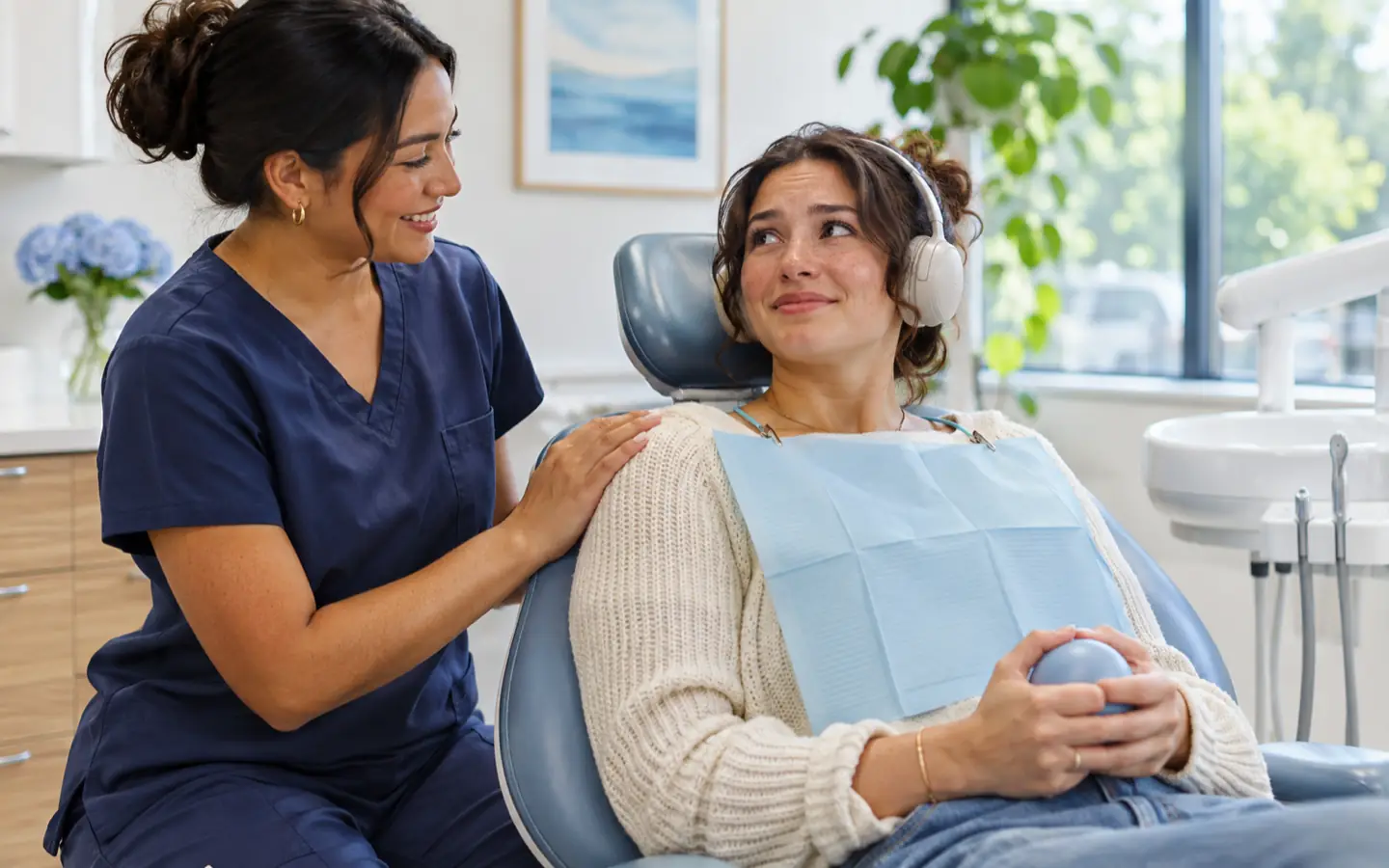
 Dental anxiety: what helpsDental anxiety is common. It can make dental visits hard. Talk openly with your dentist, try relaxation tools, and learn about sedation. These steps can help you feel more in control.

 How Dental Insurance WorksDental insurance helps lower your cost for many dental services. It is not the same as medical insurance. Learn your plan's rules so you can avoid surprise bills and use your benefits well.
Find a dentist
Search dentists by insurance