
Laughing gas (nitrous oxide) at the dentist
Share this page
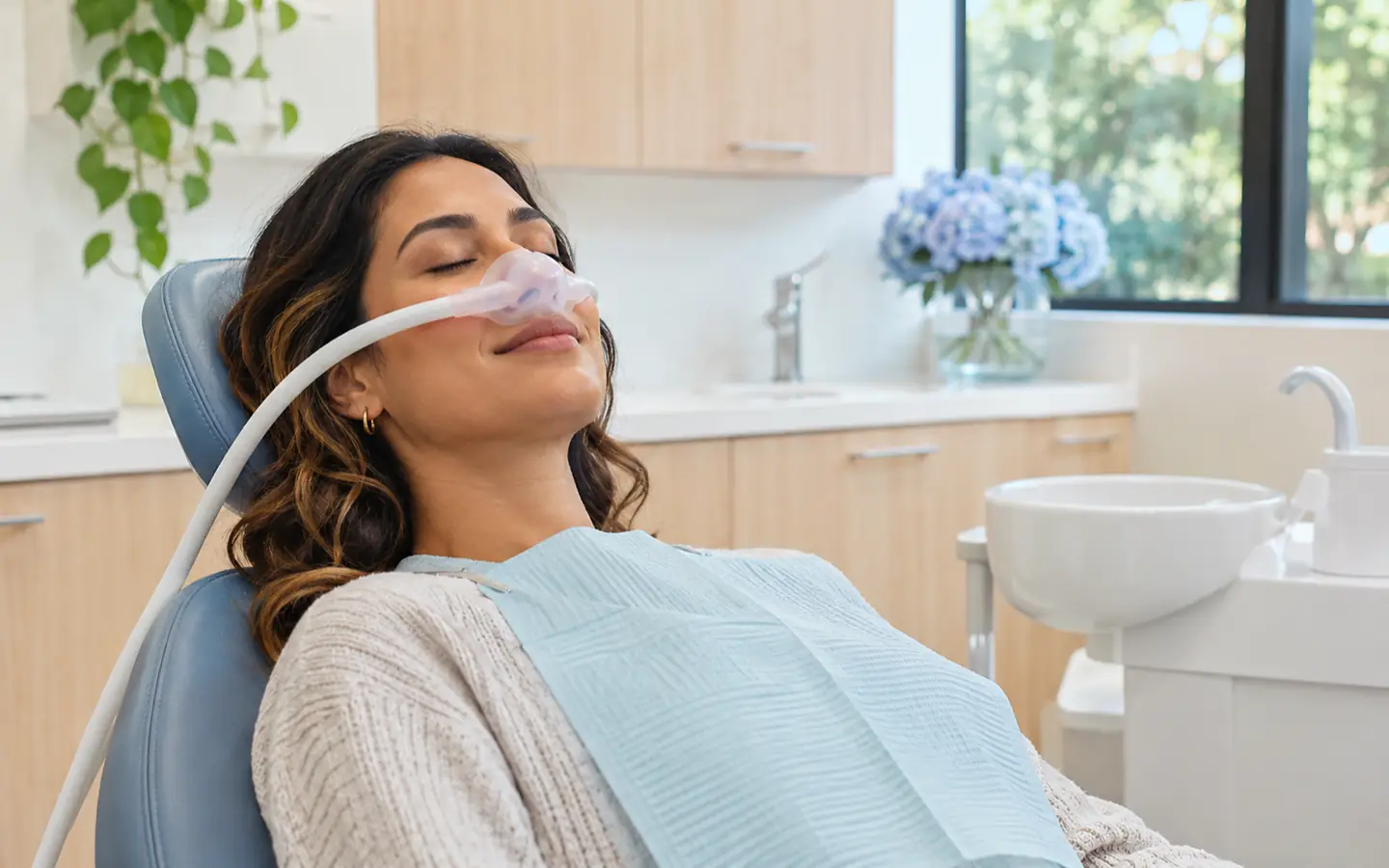
Laughing gas, also called nitrous oxide, is a light form of dental sedation. You breathe it through a small mask over your nose. It helps you feel calm and relaxed. You stay awake and can respond. It wears off quickly after the mask is removed.
- 7,672 offices listed
- in 51 states
7 min readPublished November 21, 2026Updated November 21, 2026
AI-assisted. AI disclosureEditorial policy
Find Sedation dentistry near you












What is laughing gas?
Laughing gas is the common name for nitrous oxide. It is a clear gas used in dental care for many years. In the dental office, it is mixed with oxygen. You breathe it through a small mask that fits over your nose.
Laughing gas is a light form of sedation. You stay awake. You can hear and respond to the dental team. You breathe on your own. It is not the same as being put to sleep. The goal is to help you feel calm and relaxed during treatment.
Dentists control the amount of nitrous oxide you get during the appointment. When the gas is turned off, its effects fade quickly. This often happens within a few minutes.
How laughing gas works
When you breathe nitrous oxide through the nose mask, it enters your bloodstream through your lungs. It reaches your brain quickly. It slows down some nervous system activity. This can create a warm, light, or floating feeling.
Many people describe the feeling as:
- A mild happy or giggly feeling
- Calm and less worried
- A little tingly in the arms or legs
- Detached from what is happening in the mouth
Nitrous oxide does not numb the area like a local numbing medicine. Your dentist may still use a local numbing medication if a procedure could cause discomfort. Laughing gas mainly helps with anxiety and relaxation, not pain control.
What to expect before treatment
Before your appointment, your dentist will review your health history. Be ready to share:
- Any breathing conditions such as asthma, COPD (a long-term lung disease), or a stuffy nose
- Pregnancy or possible pregnancy
- A history of low vitamin B12 levels
- Any recent ear or sinus surgery
- All medicines, vitamins, and supplements you take
For most people, no special fasting is needed before nitrous oxide. You can usually eat a light meal a few hours beforehand, but follow your dental office’s instructions. If you have a cold or blocked nose, tell the office. You need to breathe through your nose for the gas to work well.
During the appointment
You sit in the dental chair just like any other visit. The dental team places a small soft mask over your nose. You breathe normally through your nose.
The gas usually starts to take effect within 2 to 3 minutes. The dental team will ask how you feel and adjust the amount if needed. You should feel relaxed but still awake. You can follow simple directions such as open a little wider.
At the end of the procedure, the dentist turns off the nitrous oxide and gives you pure oxygen for a few minutes. This helps clear any remaining gas from your lungs.
After the appointment
Most people feel back to normal within 3 to 5 minutes after the mask is removed. Nitrous oxide does not usually cause the grogginess that can come with deeper forms of sedation.
Because recovery is quick, many people can drive themselves home and return to normal activities right away. You may feel a little tired or lightheaded for a short time. If you feel unsteady, sit for a few extra minutes before leaving the office. Follow any specific instructions from your dentist.
If you have severe shortness of breath, chest pain, or feel very unwell after you leave, call 911 or go to the nearest emergency room.
Who may benefit from laughing gas
Nitrous oxide may be an option for people who:
- Feel mild to moderate anxiety about dental visits
- Have a strong gag reflex that makes treatment difficult
- Are having a longer appointment and want help staying relaxed
- Have sensitive teeth or gums
- Are children who are nervous but able to cooperate
Keep in mind that laughing gas is a mild form of sedation. It may not be enough for someone with severe dental phobia. Your dentist can talk with you about other sedation options if needed.
Who should use caution or avoid laughing gas
Nitrous oxide is not right for everyone. Talk with your dentist and medical provider if any of these apply to you:
- Pregnancy, especially in the first trimester
- A blocked nose, cold, or sinus infection
- Certain lung conditions such as COPD (a long-term lung disease) or cystic fibrosis
- A history of low vitamin B12 levels or conditions that affect B12 absorption
- Recent ear surgery or middle ear problems
- Certain mental health or neurologic conditions
This is not a complete list. Your dentist will review your health history and decide whether nitrous oxide is a safe choice for your situation.
Side effects and risks
The most common side effects of laughing gas are mild and short-lived. They can include:
- Nausea or feeling sick to your stomach
- Dizziness or lightheadedness
- Headache
- Sweating
- Tiredness
These effects usually go away within minutes after the gas is stopped. Eating a heavy meal right before the appointment may increase the chance of nausea.
Serious problems are rare when nitrous oxide is given by a trained dental professional with oxygen and proper monitoring. However, any sedation carries some risk. The dental team will watch your breathing and responsiveness throughout the appointment.
Laughing gas for children
Many dentists who treat children use nitrous oxide to help kids feel calmer during fillings, extractions, or other treatment. A child stays awake and can answer questions, but may feel more relaxed and less aware of time passing.
Parents often ask whether laughing gas is safe for kids. When used by a trained dental team at appropriate levels, nitrous oxide is considered a widely accepted option for children. The American Academy of Pediatric Dentistry has guidance on its use. Still, not every child is a good candidate. Behavior, health history, and the type of procedure all matter.
If your child is scheduled for laughing gas, ask the dentist:
- How will you monitor my child during treatment?
- What should my child eat or drink beforehand?
- How long will it take for the effects to wear off?
Laughing gas compared with other sedation options
Dental offices may offer several levels of sedation. Here is how they generally compare:
- Laughing gas: You stay awake and relaxed. Fast recovery. You can usually drive home.
- Oral sedation: You take a pill before the appointment. It can make you drowsy, and you will need a ride home. You may not remember much of the visit.
- IV sedation: Medicine is given through a vein. Deeper relaxation or light sleep. You need a ride and close monitoring.
- General anesthesia: You are fully asleep. Used for complex surgery or certain patients. You need a ride and longer recovery.
Laughing gas is often a lighter option with a quick return to normal activities. It is not meant to replace other methods when deeper sedation is needed.
Questions to ask your dentist
Before you agree to laughing gas, consider asking:

Is nitrous oxide a safe option for my health history?
How will you adjust the amount during my procedure?
Can I drive myself home afterward?
What side effects should I watch for?
How should I prepare for the appointment?
What is your emergency plan during sedation?
Your dentist should explain the process clearly and answer your questions before treatment begins.
Finding a dentist who offers laughing gas
Not every dental practice offers nitrous oxide, so it helps to ask before you book. You can call the office and ask whether they provide laughing gas, what training the team has, and whether they accept your insurance.
Dentist Navigator lets you search dentists by insurance, specialty, and location. You can use it to look for sedation options near you and then contact the office to confirm that nitrous oxide is available.
This guide is general education only. It is not medical advice. Ask your dentist about your own situation, including whether laughing gas is appropriate for your health history and the procedure you need.
Sources
Does laughing gas put you to sleep?
No. It is a light sedative that keeps you awake and able to respond. You may feel relaxed, but you will not be asleep.
How long does it take for laughing gas to wear off?
Most people feel normal within 3 to 5 minutes after the gas is stopped. The dentist gives you oxygen to help clear it from your lungs.
Can I drive after having laughing gas?
Many people can drive themselves home because the effects wear off quickly. Check with your dentist because your own response and the amount used may affect you.
Is laughing gas safe for children?
When used by a trained dental team, nitrous oxide is considered a widely accepted option for many children. The dentist will review the child's health history and behavior before recommending it.
Will I still need a numbing shot if I use laughing gas?
Usually yes. Laughing gas helps with anxiety and relaxation, not pain. Your dentist may still use a numbing medicine to numb the treatment area.
Share this page
Related

 Sedation dentistry options explainedSedation dentistry uses medicine to help you feel calm during dental care. Options range from mild laughing gas to deeper sedation. The right choice depends on your health, anxiety, and the procedure.

 Dental anxiety: what helpsDental anxiety is common. It can make dental visits hard. Talk openly with your dentist, try relaxation tools, and learn about sedation. These steps can help you feel more in control.

 Tooth extraction: what happens and how to healTooth extraction is a common procedure done to remove a damaged, decayed, or problematic tooth. Recovery usually takes about one to two weeks, and following your dentist's aftercare instructions helps the area heal safely.
Find a dentist
Find sedation dentists