
Crowns vs. veneers: how they compare
A crown covers the whole tooth. It adds strength and repairs damage. A veneer is a thin shell on the front of a tooth. It is mainly for looks.
- 1,202 offices listed
- in 49 states
7 min readPublished November 21, 2026Updated November 21, 2026
AI-assisted. AI disclosureEditorial policy

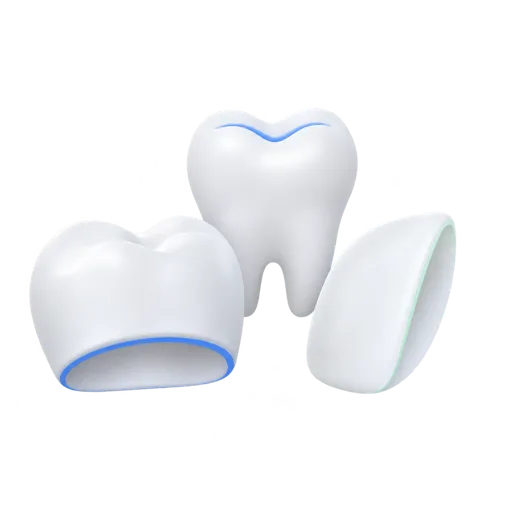












Crowns vs. veneers at a glance
A dental crown is a cap that covers the whole visible part of a tooth. A veneer is a thin shell that covers only the front surface. Crowns often restore strength and function. Veneers often improve how a tooth looks.
Both treatments are custom made in a dental lab or office. They can be made from porcelain, ceramic, resin, or metal. The right choice depends on a few things. These include your tooth health, your goals, and your dentist’s advice.
What is a crown?
A crown fits over a tooth like a cap. It covers the whole tooth above the gum line. A crown can protect a weak tooth. It can hold together a cracked tooth. It can cover a dental implant. It can also restore a tooth after a large filling or root canal.
Crowns can be made from several materials. Porcelain or ceramic crowns can match the color of nearby teeth. Metal crowns, such as gold or other alloys, are strong but more visible. Porcelain fused to metal combines strength with a tooth colored outer layer. Your dentist can explain which material may work well for your tooth. They also consider where the tooth sits in your mouth.
A crown is made after the dentist shapes the tooth. The dentist removes some outer tooth structure so the crown can fit over it. Impressions or digital scans are taken. A temporary crown protects the tooth while the final crown is made. At a later visit, the temporary crown is removed. The final crown is cemented in place.
What is a veneer?
A veneer is a thin layer of material bonded to the front of a tooth. Think of it like a false fingernail for a tooth. Veneers are most often placed on front teeth that show when you smile.
Veneers are usually made from porcelain or composite resin. Porcelain veneers are custom made in a lab. They can resist stains. Composite veneers can sometimes be shaped directly on the tooth in one visit.
Veneers can improve the color, shape, size, or length of teeth. They can also close small gaps. They can fix minor chips and slight misalignment. Veneers are not used to repair a tooth that is weak, badly broken, or has a large filling.
Key differences between crowns and veneers
- Coverage: A crown covers the whole tooth. A veneer covers only the front surface.
- Tooth preparation: A crown usually removes more tooth structure than a veneer does.
- Purpose: A crown is mainly for strength and repair. A veneer is mainly for appearance.
- Durability and care: Crowns and veneers both need good oral care. Your dentist can explain how long each may last for you.
- Cost and insurance: Veneers are often considered cosmetic. Dental insurance may not help pay for them. Crowns needed for health reasons may be covered in part. Check your plan.
When a crown may be right for you
Your dentist may suggest a crown if a tooth:
- Has a large cavity or filling that leaves little natural tooth.
- Is cracked, broken, or worn down.
- Has had a root canal and needs protection.
- Supports a dental bridge.
- Covers a dental implant.
A crown can help the tooth handle chewing forces. It does not fix gum disease. It also does not replace regular cleanings.
When a veneer may be right for you
Your dentist may talk with you about veneers if you want to change the look of healthy front teeth. Veneers may help with:
- Stains that do not improve with whitening.
- Chips or small cracks on the front edge.
- Teeth that are slightly misshapen or too small.
- Small gaps between front teeth.
- Minor unevenness or alignment issues.
Veneers are not a substitute for orthodontic treatment when bite problems are more serious. Your dentist can help you understand if veneers are appropriate.
The dental crown process
Getting a crown usually takes two or more visits.
First visit
– The dentist numbs the area around the tooth.
– The dentist shapes the tooth by removing some outer structure.
– Impressions or a digital scan are taken.
– A temporary crown is placed to protect the tooth.
Between visits
– The dental lab makes your custom crown.
– You avoid sticky or hard foods on the temporary crown.
Second visit
– The temporary crown is removed.
– The dentist checks the fit, shape, and color of the final crown.
– The crown is cemented or bonded in place.
Some dental offices offer same-day crowns. They use in-office milling equipment. Ask your dentist if that is an option.
The veneer process
Veneers often take two visits if they are porcelain.
First visit
– The dentist discusses your goals and may show you a preview.
– A small amount of enamel is removed from the front of the tooth. This helps the veneer sit flush.
– Impressions or a digital scan are taken.
– Temporary veneers may be placed.
Second visit
– The temporary veneers are removed.
– The dentist cleans and prepares the tooth surface.
– The veneer is bonded with dental cement and a special light.
Composite veneers may be done in one visit. The dentist shapes the resin directly on the tooth and hardens it.
What affects the cost
The cost of crowns and veneers varies widely. Do not rely on published price lists alone. Many things affect what you may pay:
- Material: Porcelain, ceramic, resin, and metal have different lab fees.
- Number of teeth: More teeth usually means a higher total cost.
- Dentist’s location and experience: Fees vary by region and practice.
- Lab fees: Custom work from a dental lab adds to the cost.
- Insurance: Dental insurance may pay part of a crown if it is medically necessary. Veneers are often not covered because they are considered cosmetic.
- Additional procedures: You may need a filling, gum treatment, or a root canal before a crown.
Ask your dentist for a written treatment plan and a cost estimate. If you have dental insurance, the office can check your benefits. They can tell you what your plan may pay. You can also call your insurance company to confirm coverage.
What to expect after treatment
After a crown or veneer is placed, your mouth may feel sensitive to hot or cold for a short time. This is common and usually goes away. Tell your dentist if sensitivity lasts or if the bite feels off.
You may need to avoid very hard or sticky foods for a while. Continue to brush twice a day and floss daily. Crowns and veneers do not protect against gum disease. The tooth underneath can still get decay at the edge of the restoration.
See your dentist for regular checkups. They can check the fit, look for wear, and clean around the restoration.
Caring for crowns and veneers
Good home care can help your crown or veneer last. Brush with a soft bristle toothbrush and fluoride toothpaste. Floss gently around the restoration. If you grind your teeth at night, ask your dentist about a night guard. Grinding can chip porcelain.
Avoid using your teeth to open packages or bite hard objects. Do not chew ice or hard candy. These habits can damage natural teeth and restorations.
If a crown or veneer feels loose, chips, or falls off, call your dentist. Do not try to glue it back yourself.
Questions to ask your dentist
Before you decide between a crown and a veneer, ask:

What is the health of my tooth underneath?
Will a crown or veneer be stronger for this tooth?
How much tooth structure will be removed?
What material do you recommend and why?
How long might this restoration last with good care?
What are the risks or possible complications?
Will I need any follow-up visits?
How will this affect my bite or nearby teeth?
What will my out-of-pocket cost be after insurance?
Your dentist can give you a recommendation based on your mouth, not a general rule.
Finding a dentist
Choosing between a crown and a veneer starts with a dental exam and an honest conversation. A dentist can look at the tooth, take x-rays if needed, and explain your options.
When you look for a dentist, consider their experience with restorative and cosmetic work. You may want to ask about their training. You can see before and after photos of similar cases. You can also read patient reviews. You can ask a friend or family member for a recommendation.
Dentist Navigator lets you search dentists by insurance, specialty, and location. That can help you find a dentist who takes your plan and offers the care you are considering.
If you have severe swelling, trouble breathing or swallowing, uncontrolled bleeding, or facial trauma, call 911 or go to an emergency room right away. Crowns and veneers are not emergency treatments for these symptoms.
This guide is general education and not medical advice. Talk with your dentist about your own situation.
Sources
Can a veneer be used instead of a crown?
Sometimes, for a front tooth with only a small chip or a cosmetic concern. But if the tooth is weak, cracked, or has a large filling, a crown is often stronger. Your dentist can tell you which option fits your tooth.
Do crowns or veneers hurt?
Your dentist will numb the area during the procedure. You may feel pressure but not sharp pain. After the numbness wears off, some sensitivity is common and usually goes away.
How long do crowns and veneers last?
With good care, crowns and veneers can last many years, but every mouth is different. Avoiding hard foods and grinding can help. Regular dental checkups are important.
Will insurance pay for a crown or veneer?
Insurance may help pay for a crown if it is needed for health reasons. Veneers are often considered cosmetic and may not be covered. Check your plan and ask your dental office for a pre-treatment estimate.
What happens if I do not get a crown when the dentist says I need one?
The tooth can break more. That may lead to more treatment or tooth loss. Your dentist can explain the risks of waiting. Do not ignore tooth pain or visible damage.
Related

 Planning for a dental crown: costs and stepsA dental crown is a cap that covers a damaged tooth to restore its shape, strength, and appearance. The total cost depends on the material, the tooth's location, your dentist's fees, and how your dental insurance applies to the procedure.

 Planning for veneersVeneers are thin, custom-made shells that cover the front of teeth. They can change tooth color, shape, or size. The cost depends on the material, the number of teeth, where you live, and the dentist's experience. Many dental plans see veneers as a cosmetic treatment, done mainly for looks. That means the plan may not pay for them.

 Cracked or chipped tooth: next stepsRinse your mouth with warm water, cover any sharp edge, and call a dentist. A small chip may only need smoothing or bonding, while a deeper crack can affect the tooth's nerve and may require a crown (a cap that covers the tooth) or root canal.
Find a dentist
Search dentists