
Oral cancer screening at the dentist
Share this page
An oral cancer screening is a visual and physical exam your dentist or hygienist does to look for early signs of cancer or precancerous changes in your mouth. It is not a diagnosis, but it can help find areas that need a closer look.
- 137,020 general dentistry offices listed
- in 51 states
8 min readPublished November 21, 2026Updated November 21, 2026
AI-assisted. AI disclosureEditorial policy
Find General dentist near you












What is an oral cancer screening?
An oral cancer screening is a simple exam that looks for signs of cancer or precancerous changes in your mouth. Many dentists include it as part of a routine dental checkup. The goal is to find areas that may need more attention, not to diagnose cancer. If something unusual shows up, your dentist can talk with you about the next steps.
This guide is general education, not medical advice. Ask your dentist about your own risk and what is right for you.
What happens during the screening?
The screening usually takes only a few minutes and does not require any special preparation. It has two main parts: a visual exam and a physical exam.
Visual exam
Your dentist or hygienist will look closely at:
- Your lips, including the outside and the inside surface
- Your gums and the inside of your cheeks
- Your tongue, including the top, sides, and underneath
- The roof of your mouth (palate)
- The floor of your mouth under your tongue
- The back of your throat and tonsil area if visible
They may use a light and a small mirror to see all areas clearly. They may also gently move your tongue to one side to check the sides and underneath. Your dentist may use a tongue depressor to hold your tongue down for a clear view. You may be asked to stick out your tongue and move it from side to side. This helps show the base of the tongue and the floor of the mouth, which are common places for oral cancer to start.
Physical exam
After the visual check, the dentist may feel the tissues in and around your mouth. This helps find lumps, bumps, or changes in texture that may not be easy to see. They may:
- Press gently on the floor of your mouth and the sides of your tongue
- Feel your cheeks and lips between their fingers
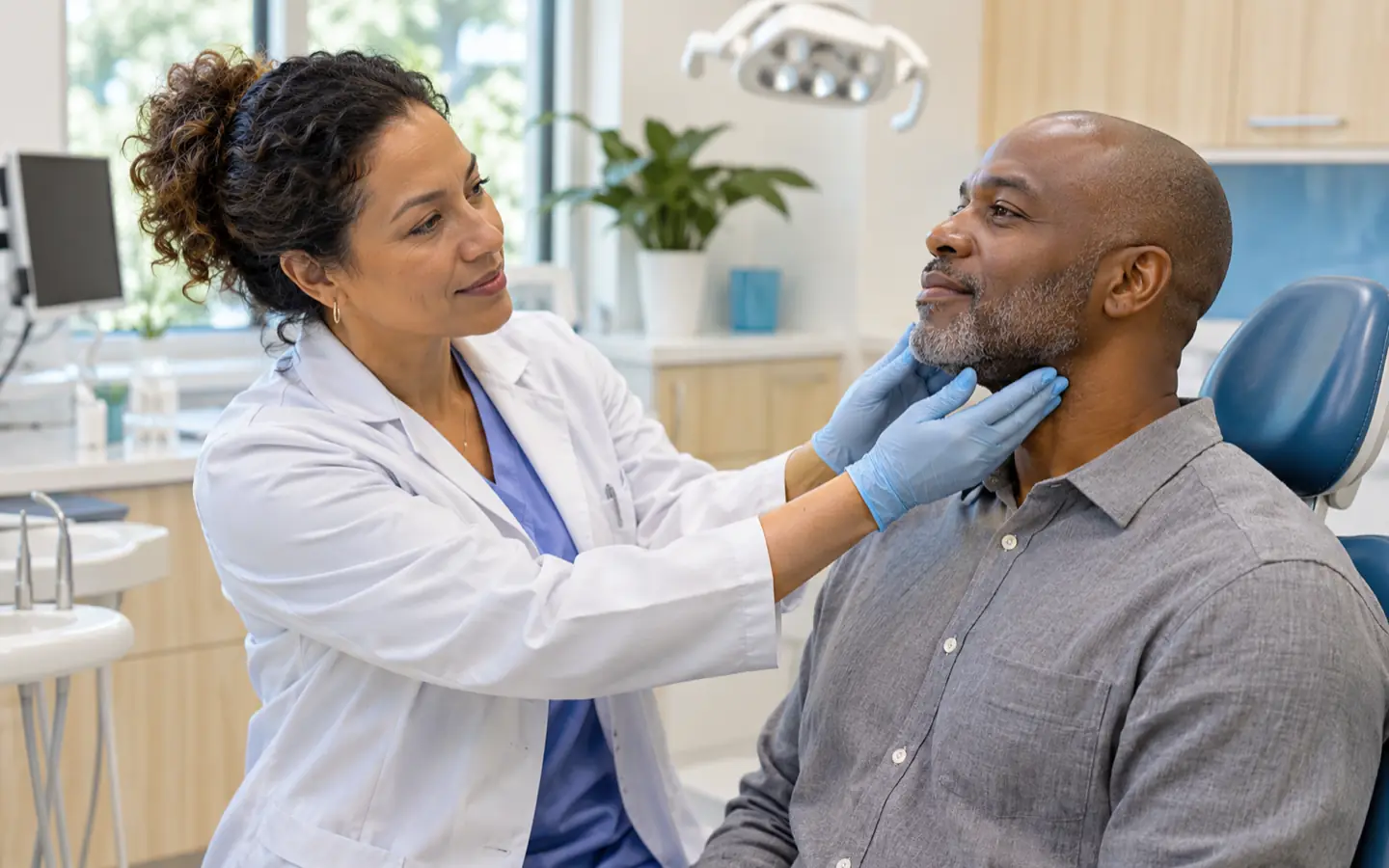
- Check the lymph nodes under your jaw and along your neck for swelling or tenderness
The lymph node check is important because some oral cancers can spread to the lymph nodes in the neck. Your dentist will feel gently along the sides of your neck and under the jaw. This part of the exam may feel like a light massage. The exam should not hurt. You may feel light pressure or a brief stretch when your tongue is moved.
What parts of the mouth are checked?
Oral cancer can appear in many places, so the screening covers the whole mouth and nearby areas. The most common spots include:
- The tongue, especially the sides and base
- The floor of the mouth
- The soft palate and hard palate
- The inside of the cheeks
- The gums
- The lips
- The tonsils and back of the throat
Your dentist may also check your face and neck because lymph nodes can become swollen when there is an infection or other issue in the mouth.
What are the signs and symptoms?
An oral cancer screening looks for changes, but you can also watch for symptoms between dental visits. Common signs include:
- A sore in the mouth or on the lip that does not heal within two weeks
- A white or red patch on the gums, tongue, tonsil, or lining of the mouth
- A lump or thickening in the cheek, lip, or neck
- Pain, tenderness, or numbness in the mouth or lips
- Difficulty chewing, swallowing, or moving the jaw or tongue
- A feeling that something is stuck in the throat
- A change in the way your teeth fit together or a change in your voice
A white patch may be called leukoplakia, and a red patch may be called erythroplakia. Both can be harmless, but red patches are more likely to show precancerous changes. Only a professional can tell the difference, so do not try to diagnose yourself. Having one of these symptoms does not mean you have oral cancer. Many harmless conditions can cause similar changes, such as canker sores, infections, or irritation from a sharp tooth or denture. But if a symptom lasts more than two weeks, tell your dentist.
What are the risk factors?
Some people have a higher chance of developing oral cancer. Knowing your risk factors can help you and your dentist decide how often to be screened and what to watch for. Common risk factors include:
- Tobacco use, including cigarettes, cigars, pipes, and smokeless tobacco
- Heavy alcohol use
- Infection with certain types of human papillomavirus (HPV)
- A personal history of oral cancer or precancerous lesions
- Long-term sun exposure, which can increase the risk of lip cancer
- A diet low in fruits and vegetables
- Older age, as risk increases over time
HPV-related oral cancers often occur at the base of the tongue and in the tonsils. They can happen in younger people who do not use tobacco or drink heavily. This is why oral cancer screening is important for adults of all ages. Having a risk factor does not mean you will get oral cancer. It simply means you and your dentist may want to pay closer attention.
What if the dentist finds something?
Most findings during an oral cancer screening are not cancer. Common harmless causes include canker sores, bite marks, a burned tongue, or a blocked salivary gland. Your dentist may ask about your symptoms, how long the area has been there, and whether it hurts.
If an area looks unusual, your dentist may:
- Take a photo or make a note to watch it at your next visit
- Suggest you come back in a few weeks to see if it has healed
- Recommend a biopsy, where a small sample of tissue is removed and sent to a lab
- Refer you to an oral surgeon, an ear, nose, and throat doctor (ENT), or another specialist
If a biopsy is recommended, you may feel nervous. That is common. The dentist can explain how the tissue sample is taken, whether you need numbing, and what the results will tell you. In many cases, the result comes back benign, meaning it is not cancer. A biopsy is the only way to know for sure whether a suspicious area is cancer. Your dentist can explain what to expect and help you schedule the next step.
How often should you get screened?
There is no single rule that fits everyone. Many dental offices include an oral cancer screening as part of each routine checkup. If you see the dentist every six months, you may get a screening that often. If you have risk factors or a history of oral cancer, your dentist may recommend checkups more often.
The important thing is to keep regular dental visits and to speak up if you notice any changes in your mouth. Catching changes early can make follow-up care easier and less involved.
Does everyone need extra testing?
For most people, the visual and physical exam is enough as a first step. Some dental offices also use special tools, such as a blue light or a dye, to help see abnormal areas. These tools can highlight changes, but they are not a substitute for a visual and physical exam. They also cannot diagnose cancer on their own.
Talk with your dentist about whether any extra testing is useful for you. The decision often depends on your symptoms, your risk factors, and what the basic exam shows.
Questions to ask your dentist
You do not need to prepare for an oral cancer screening, but you may want to ask:

Do you include an oral cancer screening at every checkup?
What exactly will you look for and feel for?
If you find something, what is the next step?
Are there any areas in my mouth I should watch at home?
How often should I come in based on my risk factors?
A good dentist will explain what they are doing and answer your questions in plain language.
What you can do between visits
You can help by paying attention to your mouth between dental visits. Each month, look inside your mouth with a small mirror. Check your tongue, cheeks, gums, and the roof of your mouth for anything new or different. If you wear dentures, take them out and check the tissue underneath.
If you notice a sore that does not heal, a new lump, or a white or red patch, do not panic. Many things heal on their own. But if it lasts more than two weeks, call your dentist for an exam. Early reporting makes it easier to find the cause.
When to seek urgent care
Do not wait for a routine screening if you have severe symptoms. Call 911 or go to an emergency room for:
Trouble breathing or swallowing
Swelling in your mouth, face, or neck that gets worse quickly
Uncontrolled bleeding from the mouth
Facial trauma that causes pain, swelling, or broken teeth
These are not the same as a routine screening and need immediate medical attention.
Finding a dentist
If you are due for a checkup or want an oral cancer screening, look for a dentist who makes you feel comfortable and listens to your concerns. Dentist Navigator is a free directory that lets you search dentists by insurance, specialty, and location. You can use it to find a practice near you, then call to confirm they offer oral cancer screenings as part of a routine visit.
When you call, ask about the dentist’s approach to screening and whether they have experience with patients who share your risk factors. A calm, honest conversation can help you feel prepared for your visit.
This guide is general education only and does not replace advice from a dentist or doctor. Talk with your own dental team about your mouth, your risk factors, and what screening schedule is right for you.
Sources
Is an oral cancer screening painful?
No, a routine oral cancer screening should not hurt. You may feel light pressure when the dentist feels the tissues in your mouth and neck, but it only takes a few minutes. Tell your dentist if any area is tender.
How often should I get an oral cancer screening?
Many dentists include the screening with each routine checkup, often every six months. If you have risk factors such as tobacco use or a history of oral cancer, your dentist may suggest more frequent visits. Ask what schedule fits your situation.
What if my dentist finds a white patch or sore?
Most findings are harmless and can be watched or treated easily. Your dentist may ask you to return in a few weeks to see if the area heals. If it looks concerning, they may recommend a biopsy or a referral to a specialist.
Can I do an oral cancer screening at home?
You can watch for changes between dental visits, such as a sore that lasts more than two weeks or a new lump. But a professional visual and physical exam can reach areas that are hard to see yourself. Your dentist also knows what to look for and when to take the next step.
Who is at higher risk for oral cancer?
People who use tobacco, drink alcohol heavily, or have certain types of HPV have a higher risk. Long-term sun exposure raises the risk of lip cancer, and risk generally increases with age. Talk with your dentist about your own risk factors.
Share this page
Related
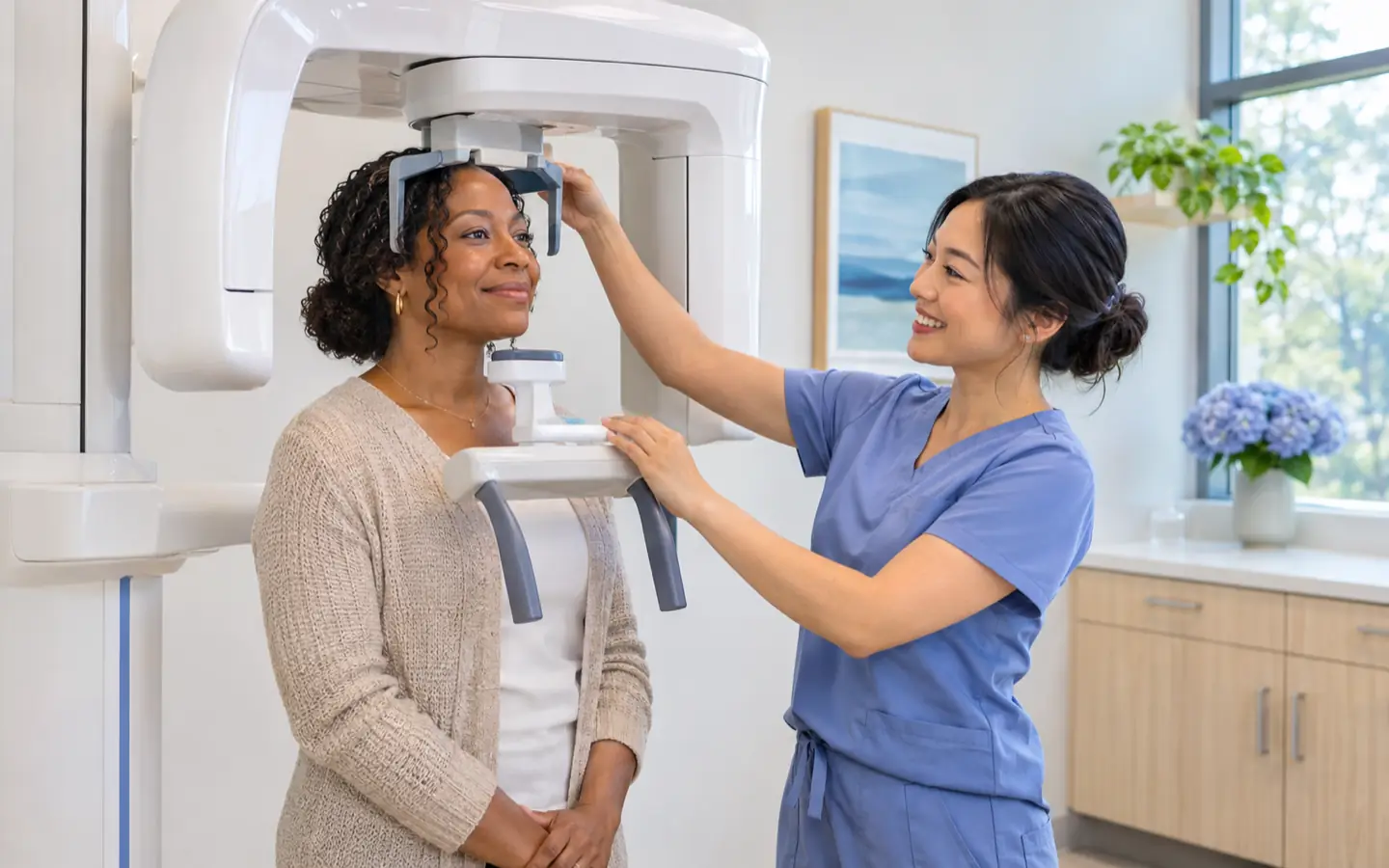
 Dental X-rays: types and safetyDental X-rays show cavities, bone loss, infections, and tooth positions a visual exam cannot see. Modern dental X-rays use very small amounts of radiation. Your dentist chooses the type and timing based on your personal risk.

 What happens at a dental cleaningA dental cleaning removes plaque, tartar, and surface stains from your teeth. It usually includes an exam, scaling, polishing, flossing, and sometimes fluoride.

 How often should you see a dentistMost adults should see a dentist for a checkup and cleaning every 6 months. Your personal schedule may be shorter or longer based on your oral health, medical conditions, and risk factors.
Find a dentist
Find a dentist for a screening