
Teeth Whitening Options Compared
You can whiten teeth at the dentist's office or at home. At home, you can use custom trays, strips, or whitening toothpaste. Results and side effects vary. Talk with a dentist about which approach fits your teeth and goals.
- 1,202 offices listed
- in 49 states
7 min readPublished November 21, 2026Updated November 21, 2026
AI-assisted. AI disclosureEditorial policy












What to know before you whiten
Teeth whitening is a cosmetic treatment that lightens the color of natural teeth. It uses bleaching chemicals to break down stains on the enamel and deeper in the tooth. Common bleaching chemicals are hydrogen peroxide or carbamide peroxide. Whitening does not change the shape or position of teeth. It is not a substitute for regular dental care.
Before you start whitening, talk with a dentist. A dentist can check for cavities, gum disease, worn enamel, or other issues. Treat these problems first. Whitening with untreated tooth decay or exposed roots can cause sharp pain or more irritation. Your dentist can also help you set realistic expectations based on the cause of your stains.
Whitening is not for everyone
Whitening may not be a good choice if you are pregnant or nursing, if you have very sensitive teeth, or if you are allergic to bleaching ingredients. Children and teens should not whiten until their permanent teeth are fully in and a dentist says it is safe. If you have crowns, veneers, fillings, or bonding (tooth-colored material) on front teeth, those will not whiten. That can make your smile look uneven if you only whiten natural teeth.
Whitening does not change dental work
Crowns, veneers, fillings, and bonding materials are made from porcelain, composite resin, or other materials. Porcelain is a tooth-colored ceramic. Composite resin is a tooth-colored filling material. These materials do not respond to bleaching chemicals. If you have visible dental work, whitening your natural teeth may make the dental work look darker or mismatched. A dentist can talk with you about options such as replacing or polishing the dental work after whitening.
Professional in-office whitening
In-office whitening, also called chairside whitening, is done at a dental office. It uses a stronger bleaching gel than over-the-counter products. Because the gel is strong, your dentist will protect your gums and soft tissues. They use a barrier or gel before applying it.
How it works
The dentist may place a cheek retractor to keep your lips away from your teeth. Then they paint a protective material on your gums. After that, the whitening gel goes on your teeth. Some systems use a special light or laser to speed up the chemical reaction. But the bleaching chemical does the whitening. The gel usually stays on for about 15 to 30 minutes per session. The dentist may apply it again once or twice during the same visit.
What to expect
An in-office visit typically takes 60 to 90 minutes. You may see a noticeable color change right away. Results depend on the starting shade, the type of stains, and how your teeth respond. Your dentist may recommend a take-home touch-up kit or a second visit if you want more change. Some people feel temporary tingling or sensitivity during or after treatment.
Pros and cons
Pros:
- Fast results in one visit
- A dentist supervises to reduce gum damage
- Stronger gel handles deep or stubborn stains
Cons:
- Usually costs more than at-home options
- May cause temporary tooth sensitivity
- Requires a dental visit
Take-home whitening from your dentist
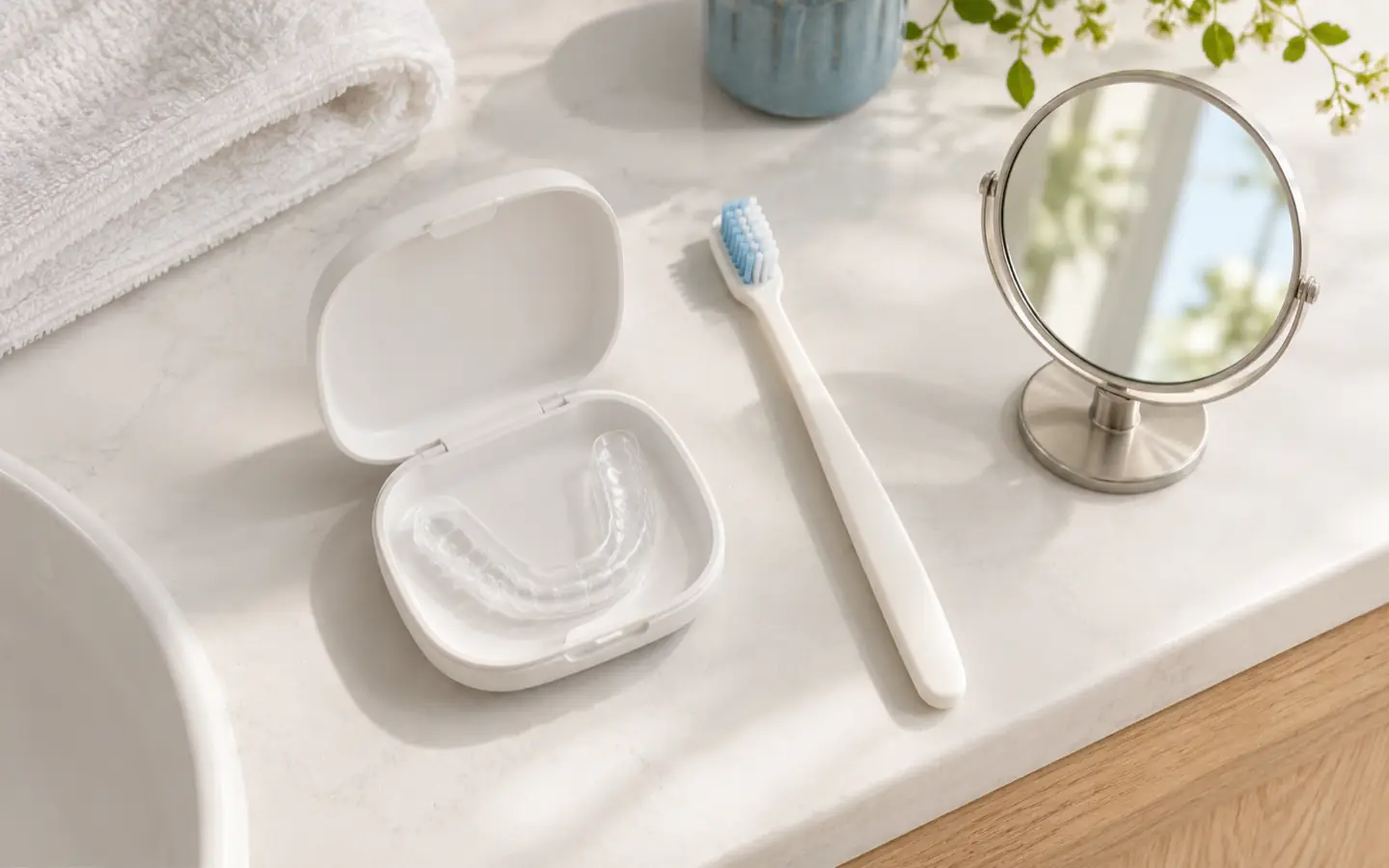
Your dentist can also make custom-fitted trays for you to whiten at home. This option uses a professional-strength gel but in a lower concentration than in-office treatment. You wear the trays for a set time each day or night, following your dentist’s instructions.
How it works
The dentist takes impressions or digital scans of your teeth. Then they make thin, flexible trays that fit snugly. You place a small amount of whitening gel inside each tray and put the trays over your teeth. Most people wear the trays for 30 minutes to a few hours a day, or overnight, depending on the product. Treatment may last one to two weeks for noticeable results.
Pros and cons
Pros:
- Custom fit helps the gel stay on teeth and off gums
- You can whiten on your own schedule
- Often gentler than in-office treatment
Cons:
- Takes days or weeks for full results
- You must follow the schedule closely
- Costs more than over-the-counter products
Over-the-counter whitening products
Many drugstores and online stores sell whitening strips, gels, toothpaste, rinses, and pre-filled trays. These products use lower concentrations of bleaching chemicals. They are generally safe when you follow the label directions. But they may not fit as well as custom trays. Results can be uneven if the product does not reach all areas.
Whitening strips and gels
Whitening strips are thin, flexible pieces of plastic coated with a peroxide gel. You press the strips onto your front teeth and leave them for the recommended time, often 20 to 30 minutes a day. Gels come in small tubes or pens that you paint onto teeth. Both options usually need one to two weeks of daily use for a visible change. They work well on straight, evenly shaped teeth. The strip or gel may miss gaps or crowded areas.
Whitening toothpaste and rinses
Whitening toothpaste and mouth rinses do not actually bleach teeth. They use mild abrasives (polishing agents) to remove surface stains from coffee, tea, or tobacco. They can help maintain results after bleaching. But they will not change the natural color of your teeth. Using them too often or with hard brushing can wear down enamel over time. Follow the instructions.
Other at-home methods
Some people try whitening kits with LED lights, charcoal powders, or baking soda pastes. There is little reliable evidence that charcoal or LED lights add much benefit beyond the peroxide gel itself. Baking soda can remove surface stains but can also be abrasive. If you choose an over-the-counter method, look for products with the American Dental Association (ADA) Seal of Acceptance. This seal means the product has been tested for safety and effectiveness when used as directed.
Comparing your options
Here is a simple way to think about the main choices:
- In-office whitening: fastest results, strongest gel, highest cost, dentist supervises.
- Take-home custom trays from a dentist: medium speed, medium strength, medium cost, custom fit.
- Over-the-counter strips or gels: slower results, lower strength, lower cost, one-size-fits-most fit.
- Whitening toothpaste or rinse: only removes surface stains, no bleaching, low cost, good for maintenance.
No single option is right for everyone. Your choice depends on your budget, how quickly you want results, how sensitive your teeth are, and whether you have dental work that will not whiten. A dentist can help you weigh the tradeoffs.
Side effects and how to manage them
Tooth sensitivity and gum irritation are the most common side effects of whitening. Sensitivity usually feels like a short, sharp sensation when you eat or drink something cold, hot, or sweet. Gum irritation can happen if the bleaching gel touches your gums for too long.
To reduce sensitivity, you can:
- Use a toothpaste made for sensitive teeth for a week or two before whitening.
- Wear the trays for a shorter time each day.
- Take a day off between whitening sessions.
- Avoid very cold or hot foods and drinks while you are whitening.
If gum irritation develops, check that the trays or strips are not overlapping onto your gums. You can also apply less gel. These side effects are usually temporary and go away within a few days after you stop whitening.
If you have severe pain, swelling, or signs of an allergic reaction such as hives or difficulty breathing, stop whitening and call your dentist right away. For trouble breathing or facial swelling, call 911 or go to an emergency room.
Keeping your teeth white
Whitening is not permanent. Your teeth can pick up new stains from foods, drinks, and tobacco over time. To help results last:
- Brush twice a day with fluoride toothpaste and floss daily.
- Rinse your mouth with water after drinking coffee, tea, red wine, or soda.
- Use a straw for staining drinks when practical.
- Avoid tobacco products.
- See your dentist for regular cleanings and checkups.
- Ask your dentist about touch-up whitening once or twice a year.
Finding a dentist for whitening
If you are thinking about teeth whitening, start with a dental exam. Make sure your teeth and gums are healthy. A general dentist or a cosmetic dentist can talk with you about which options fit your goals and budget. Ask about what the treatment will cost, how many visits or days are needed, and what you can expect for your specific type of staining.
When you are ready to look for a dentist, Dentist Navigator can help you search by insurance, specialty, and location. You can narrow your search to find a dentist who offers whitening and takes your dental plan. Always confirm coverage and costs with the dental office before starting any cosmetic treatment.
Sources
Does teeth whitening work on all stains?
Whitening works well on yellow surface stains from food, drinks, and tobacco. Gray or brown stains from injury or medication may not respond as much. A dentist can tell you what type of stains you have. They can also tell you what results to expect.
How long do whitening results last?
Results can last from a few months to a couple of years. It depends on your habits. Drinking coffee, tea, red wine, or using tobacco can shorten the results. Regular cleanings and touch-up treatments can help keep the color.
Can I whiten my teeth if I have sensitive teeth?
Many people with sensitive teeth can still whiten. Use a lower concentration gel or a shorter wear time. Talk with your dentist first, because untreated sensitivity may be a sign of a problem. Your dentist may suggest a desensitizing toothpaste before you start.
Are over-the-counter whitening products safe?
Over-the-counter strips, gels, and toothpastes are generally safe when you follow the label. Look for products with an ADA Seal of Acceptance. This seal means they have been tested for safety and effectiveness. If you have questions, ask a dentist.
Will dental insurance cover teeth whitening?
Most dental plans consider teeth whitening a cosmetic procedure. They do not cover it. Coverage can vary, so check with your insurance company or the dental office before starting. If cost is a concern, ask about payment plans or membership options.
Related

 Planning for professional teeth whiteningProfessional teeth whitening can lighten stains under a dentist's care. Costs vary. Most dental insurance does not cover it because it is cosmetic. Ask your dentist which option fits your teeth and budget. Get a written estimate before you start.

 Veneers explained: what to expectDental veneers are thin, custom-made shells that cover the front surface of teeth to change their color, shape, size, or length. This guide walks you through types, the step-by-step process, aftercare, risks, and what to ask your dentist before deciding.

 Sensitive teeth: causes and what helpsSensitive teeth can cause sharp pain when you eat or drink something hot, cold, sweet, or acidic. Usually the cause is worn enamel or receding gums. A dentist can help you find relief and check for more serious problems.