
Dental implants explained
A dental implant is a titanium post placed in the jawbone to replace a missing tooth root, with a crown attached on top. This guide explains the process, what to expect, risks, and how to talk with your dentist about your options.
- 2,384 offices listed
- in 51 states
6 min readPublished November 21, 2026Updated November 21, 2026
AI-assisted. AI disclosureEditorial policy













What are dental implants?
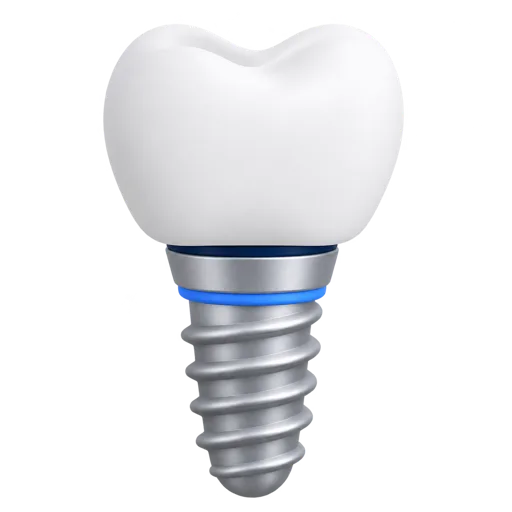
A dental implant is a small post. It is usually made of titanium. A dentist or oral surgeon places it into your jawbone. It replaces the root of a missing tooth. After the bone heals around the post, a connector piece called an abutment is attached. Then a custom-made crown is placed on top. The crown looks and works like a natural tooth.
Dental implants can replace one tooth or several teeth. They can also support a bridge or denture. Adults often choose implants after losing teeth to injury, decay, or other reasons. The implant fuses with your bone. This gives a stable base for chewing and speaking.
This guide gives general information. It is not medical advice. Talk with your dentist about your own situation and whether implants are right for you.
Parts of a dental implant
A dental implant has three main parts:
- Implant post: A screw-like post placed into the jawbone. It replaces the tooth root.
- Abutment: A small connector on top of the implant post. It holds the crown.
- Crown: The visible tooth-shaped cap. It is made to match your other teeth.
Some implants have the abutment and post as one piece, but the basic idea is the same.
How the implant process works
Getting an implant usually happens in several steps over a few months. Your dentist will explain the exact timeline for you.
Step 1: Exam and planning
Your dentist will examine your mouth, take X-rays, and sometimes use 3D scans. This helps them see your jawbone, nerves, and sinuses. They will check if you have enough healthy bone to hold an implant. If not, you may need a bone graft first.
They will also ask about your health history, medicines, and habits like smoking. This is the time to share any concerns.
Step 2: Placing the implant
On surgery day, your dentist will numb the area with local anesthesia. You may also have sedation if you and your dentist agree. The dentist makes a small opening in the gum. They place the implant post into the bone. Then the gum is closed over or around the post.
You will not feel sharp pain during the procedure because of the numbing. You may feel pressure or movement.
Step 3: Healing and bone growth
Over the next several weeks to months, the bone grows around the implant post. This process is called osseointegration (bone bonding). It is what makes the implant stable. Healing time varies, but it often takes a few months. Your dentist will tell you what to expect.
During this time, you may wear a temporary tooth or a partial denture so you are not left with a gap.
Step 4: Placing the abutment
Once the implant is firmly attached to the bone, your dentist will place the abutment. This may be a short appointment with local anesthesia. Sometimes the abutment is placed at the same time as the implant, but often it is a separate step.
Step 5: Placing the crown
After your gums heal around the abutment, your dentist takes impressions of your mouth. A dental lab makes a crown to match your natural teeth in size, shape, and color. When it is ready, the dentist attaches it to the abutment. You may need a follow-up visit to check the fit.
Healing and recovery tips
Most people have some soreness, swelling, or minor bleeding after implant surgery. This usually improves within a few days. Your dentist will give you specific instructions. General tips include:
- Use an ice pack on your cheek for short periods to help with swelling.
- Eat soft foods for the first few days, such as yogurt, soup, and mashed potatoes.
- Avoid hot liquids and hard, crunchy, or sticky foods until your dentist says it is okay.
- Take any medicines exactly as directed.
- Keep your mouth clean, but be gentle around the surgical area.
- Do not smoke or use tobacco. Smoking can slow healing and raise the risk of implant failure.
- Call your dentist if you have severe pain, heavy bleeding, or swelling that gets worse.
Who is a good candidate for dental implants?
Many adults can get implants, but not everyone is a good candidate. Your dentist will look at several things:
- Enough healthy jawbone to support the implant. If bone has shrunk after tooth loss, a bone graft may help.
- Healthy gums. Gum disease can affect healing and long-term success.
- Overall health. Some conditions, such as uncontrolled diabetes, can slow healing.
- No smoking or willingness to quit during healing.
- Commitment to good oral care and regular dental visits.
Age alone is not a main barrier. Adults of many ages can get implants if their jaw has finished growing.
Risks and possible complications
Dental implants are common and generally safe, but like any procedure, they have risks. Possible issues include:
- Infection at the implant site.
- Damage to nearby teeth, nerves, or blood vessels.
- Sinus problems if an upper implant is placed close to the sinus.
- Implant does not fuse with the bone and needs to be removed.
- Gum recession around the implant.
- The crown or abutment becomes loose over time.
Talk with your dentist about your personal risks. Tell them about all medicines, supplements, and health conditions, especially diabetes, autoimmune disease, or a history of radiation to the jaw.
Alternatives to dental implants
Implants are one option for replacing missing teeth. Other options include:
- Dental bridge: A false tooth held in place by crowns on the teeth next to the gap. It does not replace the root.
- Partial denture: A removable frame with one or more false teeth. It clips onto remaining teeth.
- Complete denture: A removable full arch of false teeth for when all teeth are missing.
- Leaving the space open: This is an option, but missing teeth can cause nearby teeth to shift and bone to shrink over time.
Your dentist will explain the pros and cons of each option for your mouth.
Questions to ask your dentist
Before deciding on implants, ask your dentist questions such as:

Am I a good candidate for a dental implant?
Will I need a bone graft or other treatment first?
How many appointments will I need, and how long will the whole process take?
What type of anesthesia or sedation do you recommend for me?
What are the risks in my case?
How should I care for the implant after it is placed?
What will the total cost be, and what does my insurance cover?
What are my non-implant options?
Write down your questions and take them to your appointment. A good dentist will answer them clearly.
Finding a dentist who offers implants
Ask your current dentist if they place implants. If not, ask if they refer patients to an oral surgeon or periodontist. You can also use Dentist Navigator to search for dentists by insurance, specialty, and location. Look for a provider with experience in implant dentistry. Ask to see before-and-after photos of their own cases, if available.
When you meet a dentist, ask about their training, the number of implants they place each year, and how they handle complications. You have the right to get a second opinion. Finding the right dentist takes a little time, but it helps you feel more confident about your care.
Sources
Does getting a dental implant hurt?
During the procedure, you get local anesthesia. You should not feel sharp pain. You may feel pressure or movement. Afterward, most people have some soreness, swelling, or minor bleeding. This improves within a few days.
How long do dental implants last?
With good brushing, flossing, and regular dental visits, many implants last for many years. However, no treatment can promise a specific result. The crown may need repair or replacement over time due to normal wear.
Are dental implants safe?
Dental implants are a common and generally safe treatment when placed by a trained dentist. Like any procedure, there are risks such as infection, nerve damage, or implant failure. Your dentist will review the risks with you.
How much do dental implants cost?
The cost varies based on the number of implants, the need for bone grafting, the type of crown, and where you live. Your dentist will give you a written estimate after an exam. Ask what your insurance covers and whether a payment plan is available.
Can I get implants if I have bone loss?
Maybe. If your jawbone is too thin or soft, a bone graft can sometimes build it up before or during implant placement. Your dentist will check the amount and quality of your bone with X-rays or a 3D scan and tell you if grafting is an option.
Related

 Planning for dental implantsDental implants replace missing tooth roots. They can hold a crown, bridge, or denture in place. Planning ahead helps you understand the steps, healing time, and what may affect your cost.

 Dentures and partials explainedDentures and partials replace missing teeth and can be removed. They can help you chew, speak, and smile more comfortably. They take time to get used to and need daily care.
 What affects dental care costsDental care costs depend on where you live, the dentist's experience, the materials used, and your insurance. Knowing these factors helps you plan and ask for cost estimates before treatment.
Find a dentist
Search dentists who offer implants